
Understanding TDS in Water: A Comprehensive Guide
TDS refers to the amount of dissolved minerals, salts, and organic matter in your water. High or unbalanced levels can affect taste, safety, and your home's plumbing. Understanding TDS in water helps you protect your family's health and the lifespan of your home's pipes.
According to a peer-reviewed study published by ScienceDirect, researchers found that high concentrations of dissolved solids can shorten the lifespan of plumbing systems by causing scale buildup inside pipes. Excess minerals in water lead to corrosion, clogs, and reduced efficiency over time.
Millions of homeowners see changes in taste, odor, and water clarity without realizing the cause is often linked to their TDS levels. Anyone worried about water quality deserves clear answers. That begins with understanding what's actually in your water.
Water flows through your home every day, but what's inside it can be a mystery. Many homeowners do not realize how much dissolved material ends up in their tap water. Total dissolved solids influence the taste and long-term impact on plumbing systems.
Your decision to dig deeper into understanding water TDS puts you ahead of many households facing preventable water issues.
What Is TDS in Water?
TDS in water refers to the combined amount of dissolved substances such as minerals, metals, salts, and organic materials. These substances come from natural sources, municipal water treatment processes, household plumbing, and environmental factors.
Common dissolved solids include:
Calcium
Magnesium
Sodium
Potassium
Iron
Chlorides and sulfates
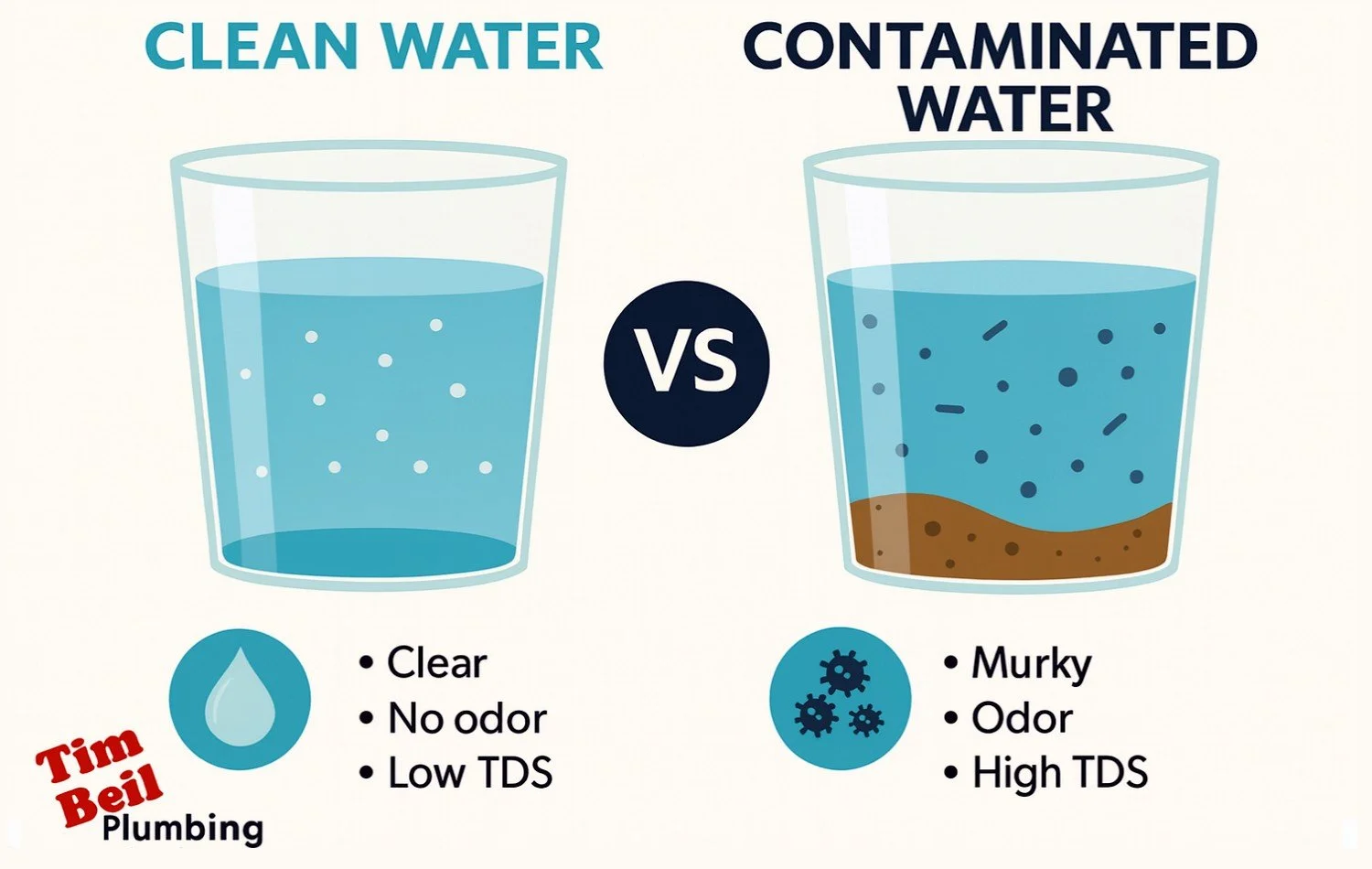
High levels do not always mean your water is unsafe. Some dissolved solids occur naturally and support a pleasant taste profile. However, when levels climb too high, the water may signal contamination or long-term plumbing risks.
What Is a Good Level of TDS in Water?
A good level of TDS in water falls between 50 and 150 mg/L for taste and household use. Levels under 300 mg/L are generally considered acceptable by many clean water standards.
Higher TDS levels may affect:
Odor
Flavor
Plumbing systems
Extra minerals do not always signal danger, but consistently high readings may indicate contaminants such as metals or chemical runoff.
What If the TDS of Water Is Below 50?
TDS levels below 50 mg/L may result in flat-tasting water. Very low TDS levels usually mean the water has been stripped of minerals.
Some families prefer water with natural minerals for flavor and balance.
How Do You Check Water TDS at Home?
A digital TDS meter provides the fastest and most accurate reading. Test strips and home kits are also common options.
A certified plumbing professional can run deeper diagnostics for contaminants. Monthly monitoring helps homeowners track patterns in their water quality.
What Causes TDS in Water?
Many sources influence your total dissolved solids levels. Groundwater naturally collects minerals as it flows through soil and rock.
Municipal water systems use disinfectants that may leave residual compounds. Aging plumbing can contribute to metals.
Common causes include:
Soil and rock mineral deposits
Water treatment chemicals
Stormwater runoff
Industrial discharge
Corrosion within household pipes
TDS is not a single contaminant. Instead, it is a measurement that helps determine whether a closer look at your water is needed.
Why TDS Levels Matter for Your Home
High TDS levels affect more than taste. Your home's plumbing system reacts to whatever flows through it. When dissolved solids accumulate, they form scale that narrows pipes and reduces efficiency.
Scale buildup impacts:
Water pressure
Water heaters and appliances
Fixture lifespan
Energy consumption
High TDS can become an expensive long-term issue if untreated.
Health Impacts of TDS in Water
Most dissolved minerals in water are harmless. Many are beneficial in moderate amounts. However, elevated TDS levels may indicate contamination by harmful substances such as:
Heavy metals
Chemicals
Agricultural runoff
Potential concerns include:
Changes in taste and odor
Increased risk for sensitive individuals
Digestive discomfort from excessive minerals
Clean Water Standards and TDS
The EPA does not regulate TDS as a primary contaminant but lists it under secondary drinking water standards. Many experts recommend keeping TDS levels under 500 mg/L for optimal taste and performance.
Clean water standards also consider:
pH levels
Hardness
Organic contaminants
Metals
TDS acts as a screening tool. When readings spike, deeper water analysis becomes important.
How to Reduce TDS in Your Home's Water
Lowering your TDS requires the right filtration system. Not all filters remove dissolved solids. Some improve taste without addressing underlying issues. A professional evaluation ensures the correct solution.
Methods include:
Reverse osmosis systems
Water softeners
Specialized carbon filters
Whole-house treatment systems
Tim Beil Plumbing offers Kinetico water treatment solutions tailored to varying TDS concerns for homeowners in the Lehigh Valley.
Frequently Asked Questions
Can High TDS Damage Home Appliances?
High TDS levels can wear down appliances faster. Mineral buildup inside heaters, dishwashers, and washing machines reduces efficiency and increases energy use.
Over time, scale forces appliances to work harder, shortening their lifespan. Homeowners who maintain filtration systems typically experience fewer appliance failures and lower utility costs. A reliable filtration system helps prevent expensive appliance replacements.
Are High TDS Levels Dangerous for Infants or Sensitive Individuals?
Infants, the elderly, and those with sensitive skin may react differently to high TDS in water. While many minerals are harmless, elevated levels may indicate harmful contaminants. Babies are especially vulnerable because their bodies process minerals differently.
Sensitive individuals may also experience skin dryness or irritation. Professional testing helps families ensure safer drinking and bathing water.
Can TDS Levels Change Throughout the Year?
Seasonal changes influence water quality. Heavy rainfall, snowmelt, drought, and construction activity can shift dissolved mineral levels. Municipal water adjustments also impact TDS.
Monitoring your water a few times a year helps detect sudden increases linked to environmental or structural changes. Seasonal tracking also helps homeowners decide when to service or upgrade filtration systems.
Take Control of Your Home's Water
Understanding TDS in water empowers you to protect your home and family. Elevated levels affect taste, appliance performance, and long-term plumbing health. Homeowners across the Lehigh Valley turn to Tim Beil Plumbing because of their long-standing commitment to quality. For 58 years, our family-run team has delivered reliable solutions backed by experienced professionals and ongoing technical training.
Tim Beil Plumbing provides customized water treatment options using industry-leading products and local expertise. Get a free water test today and start taking control of your home's water quality.