
Water Smells Like Rotten Eggs? Discover Solutions and Causes
Water smells like rotten eggs because hydrogen sulfide gas or sulfur-related bacteria have entered your water supply or plumbing system. The odor can come from your well, your pipes, or your water heater, and it almost always has a clear, fixable cause.
That smell creates instant doubt. You hesitate before pouring a glass. You wonder if it's safe to shower, cook, or let your kids drink from the tap.
Many homeowners assume it's just a temporary issue or something they have to live with, so they delay action. In reality, odors like this signal a specific problem, and the sooner it's identified, the easier it is to eliminate and prevent long-term damage to your water system.
Why Water Smells Like Rotten Eggs
The most common cause of that sulfur smell in water is hydrogen sulfide gas. This gas forms naturally when organic matter breaks down in low-oxygen environments like wells, groundwater, or parts of your plumbing system.
Another source is sulfur-reducing bacteria in pipes, filters, or softeners. These bacteria react with sulfur or sulfate minerals in the water, creating hydrogen sulfide as a byproduct. The reaction typically happens in places where water sits still, such as inside a water heater or unused plumbing lines.
Some conditions tend to make this smell worse:
Low oxygen levels in the water supply
High sulfate concentrations
Warm temperatures that encourage bacterial growth
Organic materials present in private wells
Is Smelly Water Harmful?
Most of the time, the smell is just unpleasant. At low levels, hydrogen sulfide gas isn't dangerous to your health. That said, it can corrode plumbing fixtures over time and make drinking or using the water uncomfortable.
Sometimes, though, the smell could signal other issues. If your water hasn't been tested recently, it's a good idea to check for coliform bacteria, nitrates, or other common pollutants.
How Can I Check What's Causing It?
You don't always need tools to narrow down the issue. A few simple steps might help you figure out where the smell is coming from before calling in a plumber.
Start by running hot and cold water separately at the same fixture. If only the hot smells, the heater is likely involved. If both do, the issue could be in the water supply or plumbing.
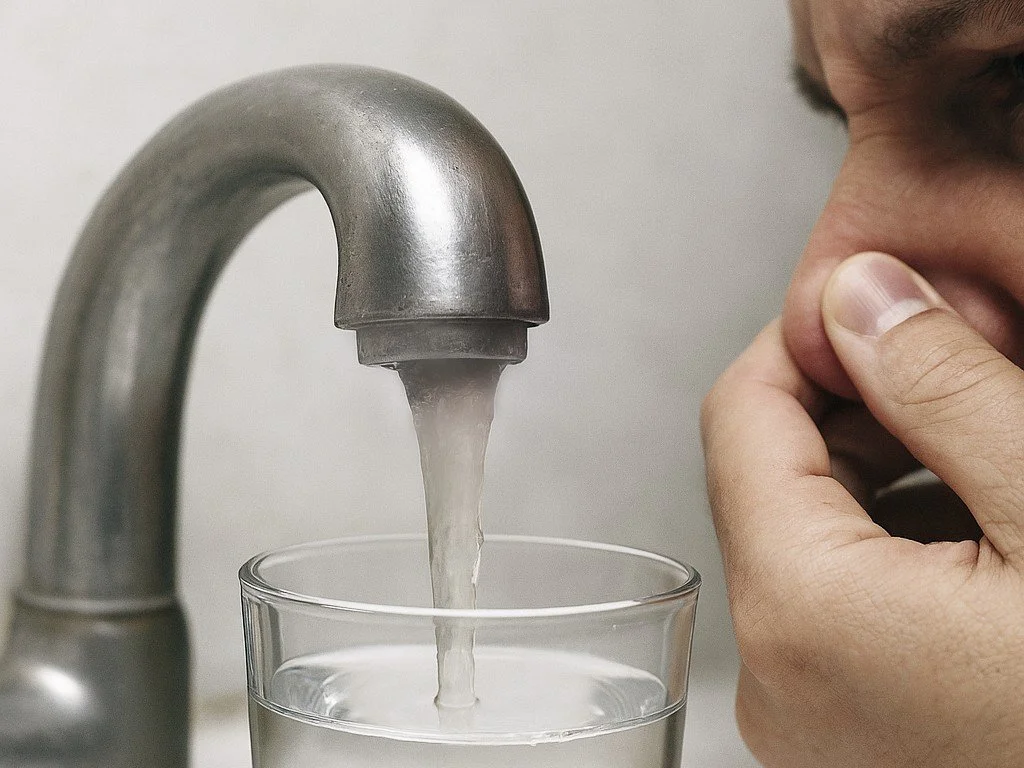
Next, fill a glass and step away from the sink. If the water in the glass still smells, the odor is coming from the water, not the drain.
You can also:
Compare multiple taps across the home
Check if recently installed softeners or filters are contributing
Inspect any under-sink filters for trapped bacteria or old cartridges
How Do You Fix Rotten Egg Smells in Water?
Once you've identified the likely source, fixing water odor problems is much easier. Some solutions are quick and low-cost, while others work best as long-term upgrades.
Simple Fixes
If the issue is limited to your hot water:
Flush sediment from the water heater
Replace the anode rod with an aluminum-zinc version
Raise the water heater temperature temporarily (within safety limits)
For issues caused by filters or softeners:
Replace or clean filter cartridges
Sanitize softener tanks
System-Wide Fixes
When the odor comes from the well or the entire plumbing system:
Schedule a professional shock chlorination of your well and pipes
Upgrade to systems built for rotten egg odor removal
Some benefits of tackling the sulfur odor system-wide include:
Fewer plumbing issues caused by corrosion and scale
Better water taste and smell at every tap
Less bacterial buildup in filters, appliances, and fixtures
What Type of Water Treatment Works Best?
Choosing the right solution depends on how severe the odor is and what your water test shows. For moderate sulfur levels, aeration systems are effective. These units expose water to air, allowing the gas to escape before it reaches your tap.
If hydrogen sulfide levels are high, you may need a combination of oxidation and filtration. Systems that use chlorine, hydrogen peroxide, or potassium permanganate can neutralize the gas before it passes through a filter.
For low levels, activated carbon filters are sometimes enough. These are common in under-sink units or point-of-entry systems. However, they wear out quickly if the odor is strong.
Professional testing is usually the smartest way to figure out what level of treatment you need. At Tim Beil Plumbing, for example, we use lab testing and Kinetico's specialty systems to match each home with the right solution.
Frequently Asked Questions
Does The Smell Go Away On Its Own?
Not usually. If the issue is inside your water heater, it might get worse over time. If it's coming from the water source or plumbing, you'll need to treat it to make the smell go away completely.
Can Hydrogen Sulfide Damage Pipes Or Appliances?
Yes. Hydrogen sulfide can speed up corrosion in metal pipes and ruin rubber seals. Over time, that damage can cause leaks and shorten the lifespan of your appliances and fixtures.
Can I Use A Brita Or Pitcher Filter To Remove The Smell?
No. Basic filters like pitcher units won't remove hydrogen sulfide. You'll need a point-of-entry system that treats all the water coming into your house.
What If I Only Smell It In One Bathroom?
It could be a fixture issue or bacteria building up in that section of piping. A plumber can check for localized problems and rule out wider system issues.
Is It Safe To Shower In Water That Smells Like Sulfur?
Most of the time, yes. Still, higher levels of hydrogen sulfide can irritate your skin or eyes. It's always better to treat the problem for your comfort and safety.
Get Rid of Rotten Egg Smells for Good
If your water smells like rotten eggs, you don't have to live with it. The source could be your water heater, sulfur bacteria in pipes, or contaminated well water, but all of these problems have proven solutions. From flushing tanks to installing specialized filtration systems, there are multiple ways to restore clean, odor-free water to your home.
Tim Beil Plumbing offers expert help backed by over 50 years of experience in the Lehigh Valley. We provide advanced water treatment systems from Kinetico, offer free water testing, and show up with clean uniforms, shoe covers, and fully marked service trucks, because quality and professionalism matter. Contact us today to schedule a water test or consultation.